OroraTech is moving satellite fire detection from hours to minutes with 15 Kepler-hosted thermal sensors in orbit by 2028
"Thermal first, always first": with 10 more Kepler-hosted sensors booked for launch in 2028, and a single in 2027, the company tells fire agencies and utilities at Red Sky Summit what shorter revisit means for initial attack strategies.
OroraTech is moving satellite fire detection from hours to minutes with 15 Kepler-hosted thermal sensors in orbit by 2028
"Thermal first, always first": with 10 more Kepler-hosted sensors booked for launch in 2028, and a single in 2027, the company tells fire agencies and utilities at Red Sky Summit what shorter revisit means for initial attack strategies.
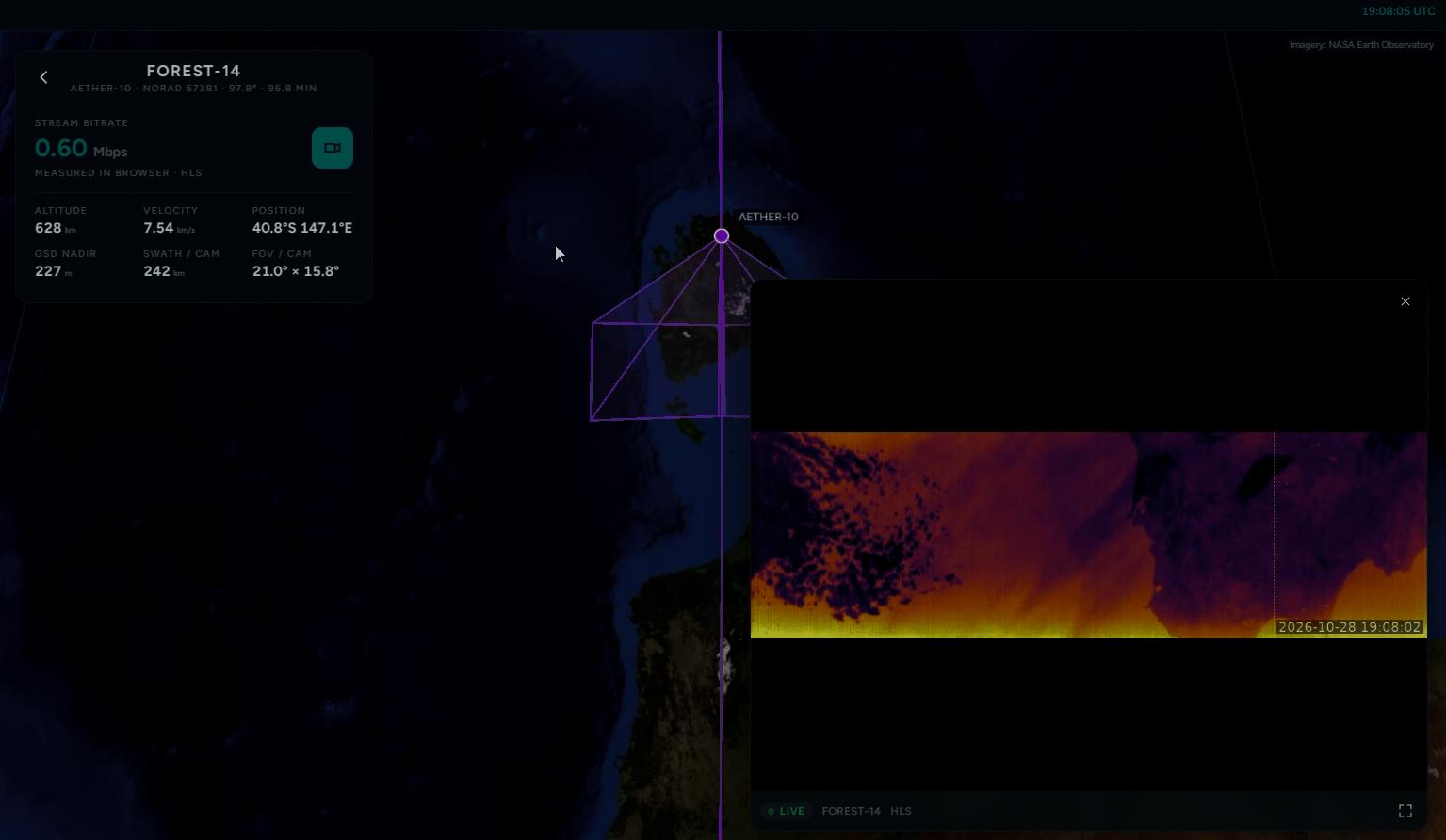
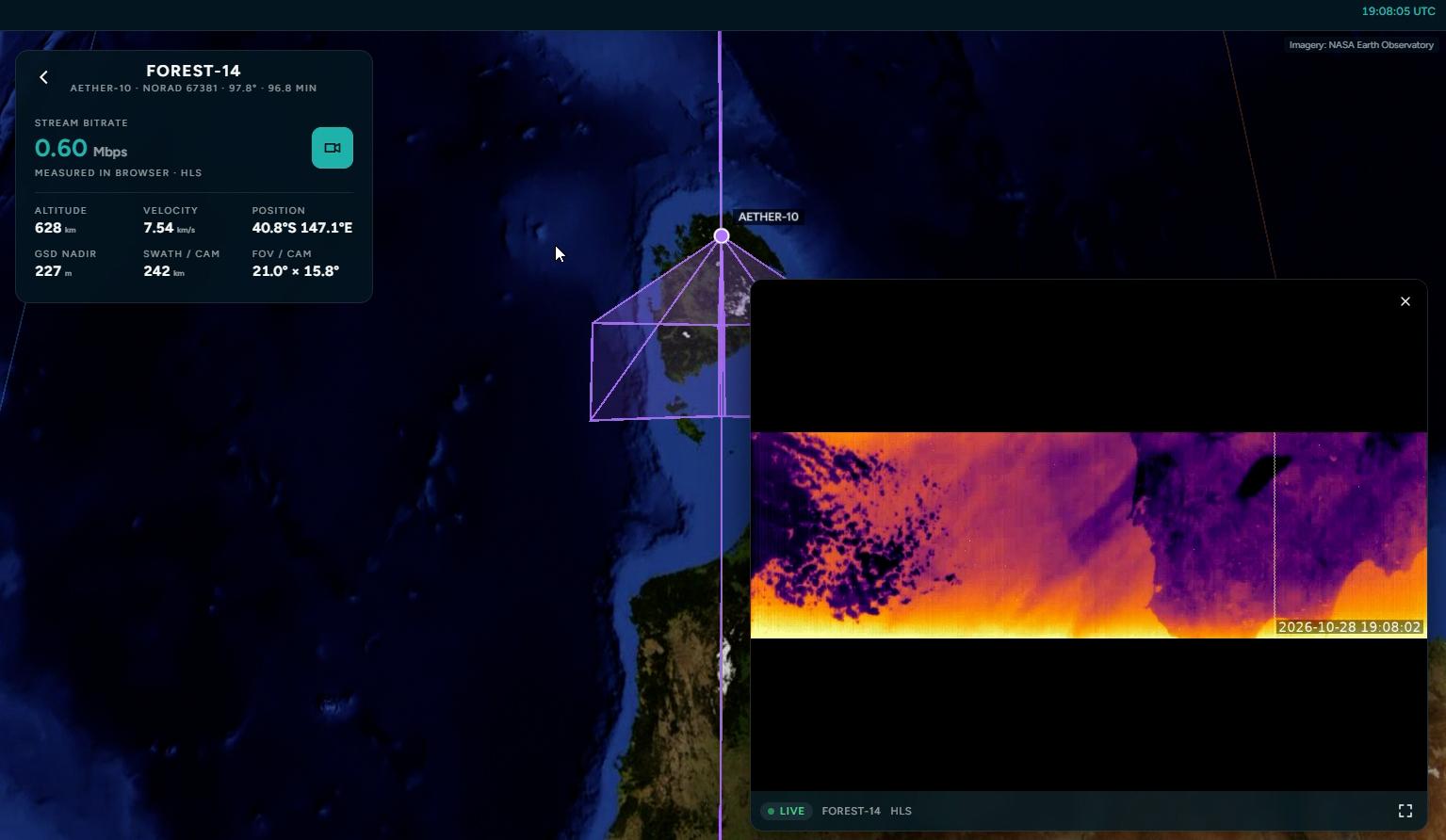
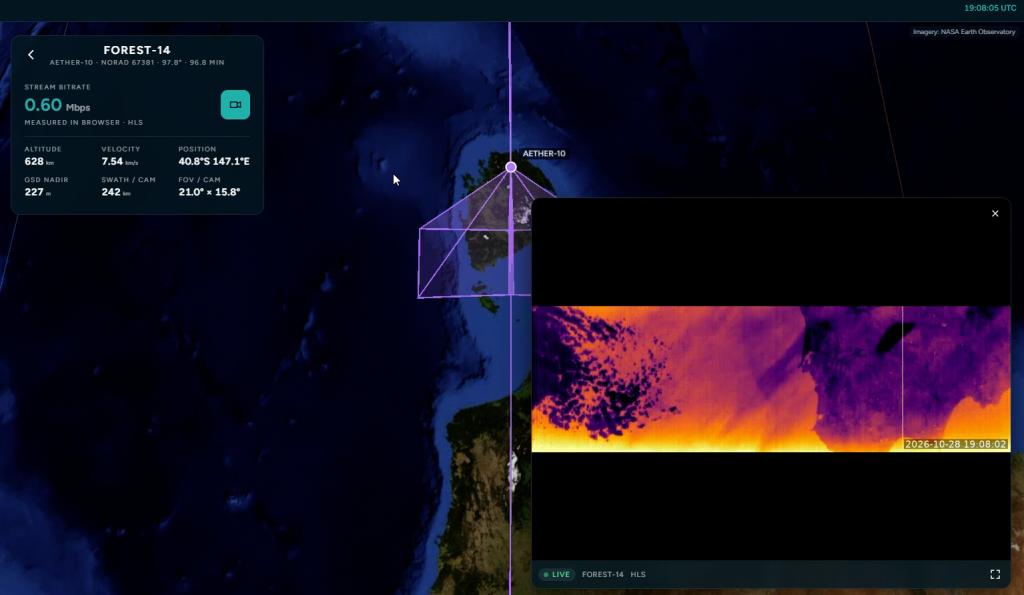
SAN FRANCISCO - November 4, 2026 - Heat is the first signal a wildfire gives off — before smoke is visible to a camera, before a 911 call, at night and through haze. Because of that, 10 additional OroraTech wildfire sensors will shorten the time between fire detection and a firefighter dispatch decision, being integrated on Kepler Communications' Tranche 2 satellites for launch in early 2028. This joins four Kepler-hosted sensors already in orbit, and a single sensor launching in 2027. At Red Sky Summit in San Francisco today, OroraTech is demonstrating a live connection to wildfire satellite data through Kepler's optical communications network, showcasing how faster data transmission can deliver critical wildfire intelligence to first responders.

“Agencies tell us the same thing in Idaho, Quebec, and Alabama: they don't want more detections, they want the right ones, early, with a size and a location they can act on," said Thomas Gruebler, CEO of OroraTech USA. “Thermal first means we start from the signal that exists before smoke. Always first means the alert should be in the dispatcher's hands before the first 911 call."
The company operates 20 thermal sensors total in orbit, 18 of which have been launched in the last 2 years. These supply detections and fire perimeter data to state and country fire agencies, including the Idaho Department of Lands, the Alabama Forestry Commission, and the Aspen Fire Protection District as well as to municipal and provincial agencies in Canada and Australia, and national services in Greece. Its data is also available to U.S. federal agencies through NASA's Commercial SmallSat Data Acquisition (CSDA) program.

"Wildfire agencies need data with speed and consistency. We are building both at the same time,” said Ignacio Zuleta, Chief Technology and Product Officer at OroraTech. "Adding more sensors in orbit is the next step. Each one shortens the time between updates on wildfires, and quickens data reaching emergency crews and dispatchers."
Each additional satellite and sensor shrinks the gap between fire overpasses. With 15 Kepler-hosted sensors by 2028, OroraTech's own next-generation satellites, and up to 96 wildfire sensors on Eutelsat's fleet, OroraTech will achieve its goal of detecting and updating fire data every 15 minutes for first responders.
For a utility provider, that is a wildfire ignition near a transmission line detected and alerted during the same storm event rather than after it; for a fire agency, a location and size of ignition or embers while the fire is still a crew-and-engine problem rather than an aircraft problem. Detections from OroraTech’s existing satellite network already reach OroraTech’s Wildfire Solution platform and ArcGIS, via a direct API connection within 1 hour after passing over a fire. On the Kepler-hosted sensors, that time is reduced to mere minutes.
OroraTech’s constellation is currently operating around the world, achieving notable milestones including:
During California's Rock Fire in August 2026, OroraTech's thermal perimeters were, by the company's account, the only perimeter source available to responders for the first two hours of the incident.
On May 15, 2026, the first Kepler-hosted sensor caught a fire that burned for about 100 minutes, and no other low-Earth-orbit satellite saw it.
In Quebec's 2026 lightning season, satellite detections accounted for 54% of first detections in SOPFEU's northern zone, where no cameras and few aircraft operate.
Alabama Forestry Commission uses the feed to monitor prescribed burns as well as wildfires; Idaho adopted the service statewide in September 2025.
Insurers receive the same detections through Opterrix's risk platform, with USAA as the first pilot.
The service is sold as a subscription per jurisdiction or service territory, priced for county fire districts and statewide agencies.
About OroraTech
OroraTech operates the world's largest wildfire satellite constellation for detection and monitoring and is a global leader in satellite-based wildfire intelligence. Its Wildfire Solution platform combines proprietary and public satellite data with AI-powered analytics to provide early fire detection, continuous monitoring and actionable intelligence to fire agencies, utilities and insurers. Supporting wildfire management across North America, Europe, Asia, Australia, and South America, OroraTech helps first responders identify emerging threats, track developing fires and make faster, more informed decisions. Founded in 2018 and headquartered in Munich, Germany, the company has offices in the United States, Canada, Greece, Australia and Brazil.
About Kepler
Kepler Communications Inc. is a space infrastructure provider on a mission to deliver real-time access to space data. With 33 satellites launched to date, Kepler operates the first commercial optical data relay constellation, enabling real-time, continuous space connectivity while supporting advanced on-orbit compute and hosted payload capabilities. Kepler has achieved industry-leading milestones, including the first commercial on-orbit demonstration of SDA-compatible optical inter-satellite links and successful space-to-air and space-to-ground optical communication demonstrations. Headquartered in Toronto, Canada, Kepler is building a global company to enable the future space economy.
Read more from OroraTech

OroraTech is moving satellite fire detection from hours to minutes with 15 Kepler-hosted thermal sensors in orbit by 2028

Watching Quebec's forests - working hand in hand with SOPFEU